
The Value of Human Advice in an Age of Robo Platforms
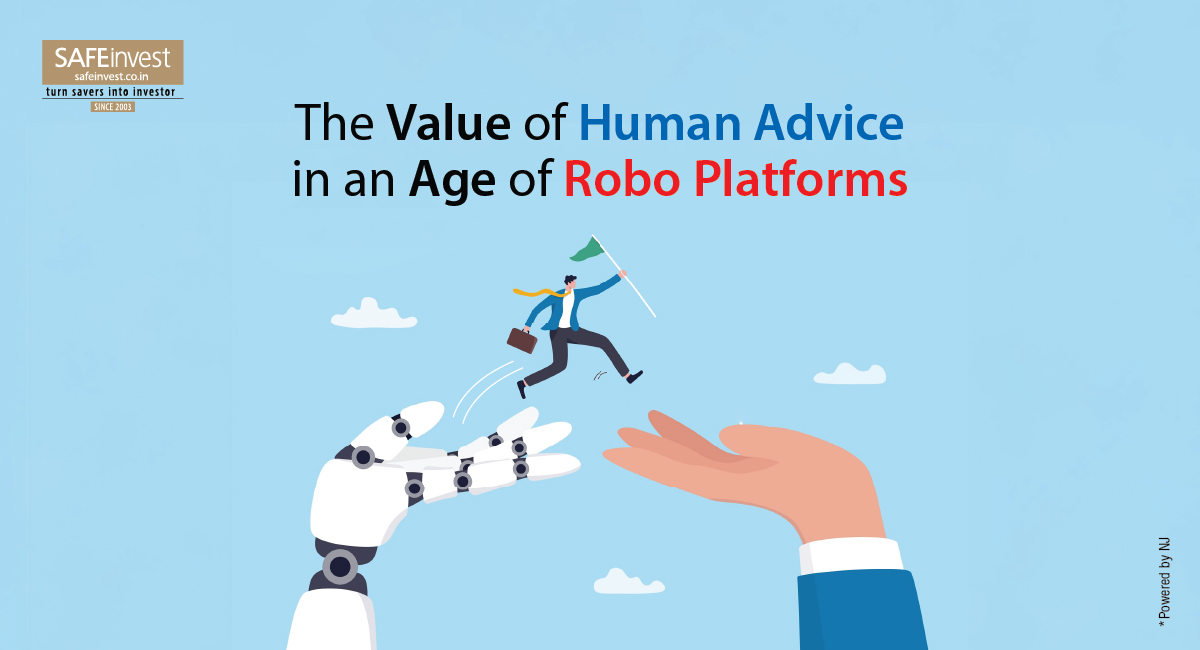
Technology has transformed every aspect of our lives, from how we shop to how we invest. Over the past decade, robo-advisory platforms have surged in popularity, offering investors a low-cost, automated way to build and manage portfolios. With algorithms capable of analysing thousands of data points in seconds, these digital tools have undoubtedly made investing more accessible.
While the screens get smarter, one question stands out: Can technology truly replace the human touch in financial guidance?
The answer is interestingly, no. While robo platforms excel at efficiency and scalability, human advice remains irreplaceable in addressing the emotional, behavioural, and deeply personal aspects of investing.
1. THE RISE OF ROBO PLATFORMS: CONVENIENCE MEETS COST-EFFICIENCY
Robo-advisors emerged as a solution to simplify investing. By leveraging algorithms, they create and rebalance portfolios based on clients’ objectives, risk tolerance, and time horizon, often at a fraction of the traditional fee. In India, digital investment platforms like Groww, Zerodha, and Paytm Money have revolutionised access to mutual funds and ETFs.
The appeal is clear:
- Low Entry Barrier: Start investing with as little a
- Automated Rebalancing: Portfolios adjust automatically as markets fluctuate.
- 24*7 Access: Investors can monitor their performance anytime, anywhere.
Yet, even as algorithms handle asset allocation seamlessly, investors often realise that money decisions are not purely mathematical; they are emotional.
2. THE MISSING HUMAN ELEMENT: BEYOND ALGORITHMS & ASSET ALLOCATION
Financial Strategy is not only about choosing the right fund or asset mix; it’s about understanding the person behind the investment.
Robo-advisors can process data, but they can’t process emotions.
They can calculate risk tolerance, but they can’t feel the anxiety of a client seeing a drop in their account overnight.
This is where human distributors shine. They:
- Listen and empathise with the client’s concern.
- Help clients stay calm and avoid panic-driven decisions.
- Tailor guidance to life changes like marriage, children’s education, retirement, or emergencies.
In behavioural finance, it’s well-documented that investor behaviour, not market performance, often determines long-term outcomes. During volatile markets, such as the COVID-19 crash or the 2022 inflation spike, relationship managers acted as emotional anchors, preventing clients from making rash exits.
In contrast, a robo platform simply follows programmed rules, unaware of the investor’s sleepless nights or shifting priorities.
3. THE HYBRID APPROACH: BEST OF BOTH WORDS
The most forward-thinking investment firms today are not choosing between humans and robots; they’re combining them.
This “hybrid model” blends technology’s efficiency with the emotional intelligence of human advisors. Robo tools handle routine tasks like financial need tracking, reporting, and rebalancing, while distributors focus on deeper financial conversations, retirement planning, tax strategies, or legacy creation.
Here’s a quick comparison:
| Aspect | Robo Platforms | Human Distributors |
| Cost | Low fees | Moderate fees |
| Emotional Guidance | None | High |
| Personalisation | Algorithmic | Holistic & Situational |
| Accessibilty | 24*7 digital | Just a call away |
| Decision-Making | Data-driven | Values-driven |
| Tax & Estate Planning | Limited | Comprehensive |
Technology enhances reach and efficiency, but the final layer of trust, that is, personal connection, comes only from a human.
4. TRUST & ACCOUNTABILITY: THE HUMAN EDGE
When you work with a financial distributor, you’re not just paying for their knowledge; you are paying for accountability.
A robo-advisor can’t call you before you make a financial mistake. It won’t ask about your child’s education needs or your dream to start a business. A human advisor will.
Moreover, trust plays a critical role in financial decision-making. Research by EY’s Global Wealth Management Report (2023) revealed that over 70% of investors still prefer some form of human interaction when dealing with complex financial matters, despite having access to digital tools.
Clients feel reassured knowing there’s someone responsible, someone who understands their fears, interprets their aspirations, and adjusts their plans with care and discretion.
5. THE EMOTIONAL ROI: WHY ADVICE IS MORE THAN NUMBERS
The term ROI is often linked to returns on investment. But in real financial well-being, there is another kind of ROI: the Return on Insight.
Human distributors provide that. They:
- Interpret financial data within the context of your life.
- Translate complex terms into simple, relatable advice.
- Encourage long-term discipline, the single biggest determinant of building wealth.
For instance, while a robo platform might suggest rebalancing your portfolio in a downturn, a human distributor might say,” Let’s hold steady, volatility is temporary, but your objectives are permanent.”
That reassurance has an emotional ROI that algorithms can’t quantify.
CONCLUSION: HUMAN TOUCH WILL ALWAYS MATTER
Robo platforms have undoubtedly made investing smarter, faster, and cheaper. But financial success isn’t built on an algorithm alone; it’s built on trust, empathy, and shared understanding. Money is personal. It reflects dreams, fears, responsibilities, and relationships. And while technology can optimise numbers, only humans can truly understand those emotions.
In an age where digital platforms continue to evolve, the real competitive edge lies not in replacing human distributors but in empowering them with better tools.
The smartest technology can guide you, but only human advice can truly stand beside you.